

Introduction The 21st century has brought about rapid changes in almost every aspect of our lives, including education. Today, we need to prepare our students for a future that values creativity, empathy, and holistic thinking more than ever before. Influential thinkers like Daniel Pink, author of “A Whole New Mind”, and Prakash Nair, the founding President of Education Design International, have been leading the charge in reimagining the learning spaces of the future.
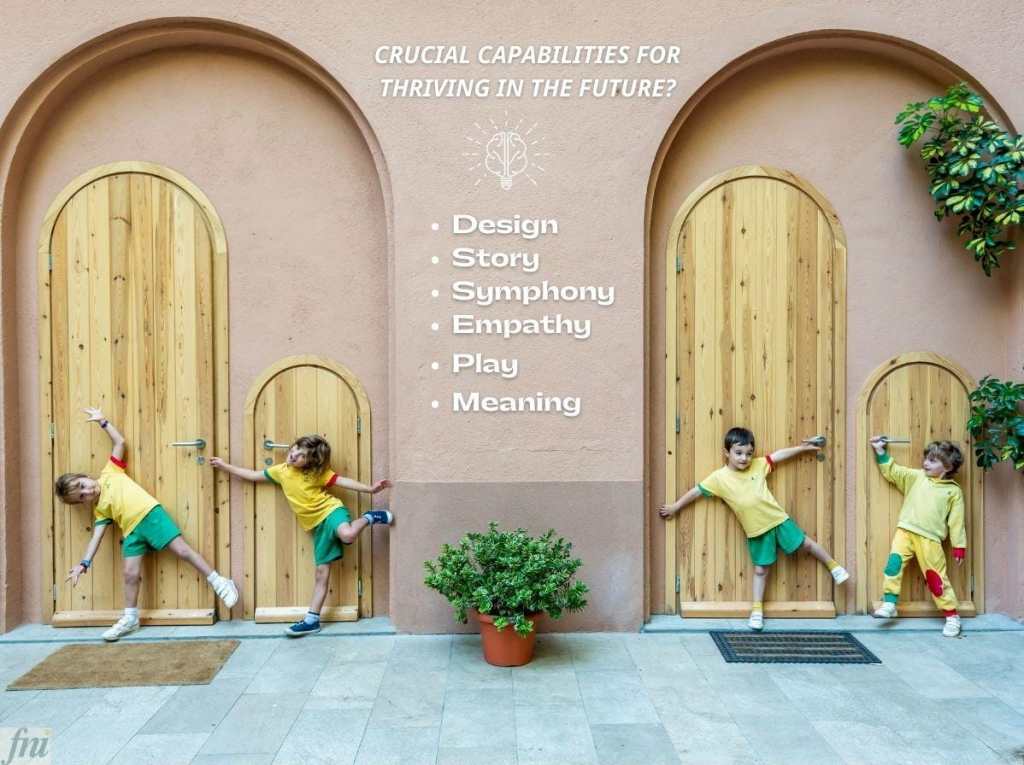
The Six Senses In his groundbreaking work, Daniel Pink describes six high-concept, high-touch senses crucial for thriving in the future: Design, Story, Symphony, Empathy, Play, and Meaning. These senses highlight the importance of creativity, empathy, storytelling, big-picture thinking, joyful learning, and purpose-driven education.
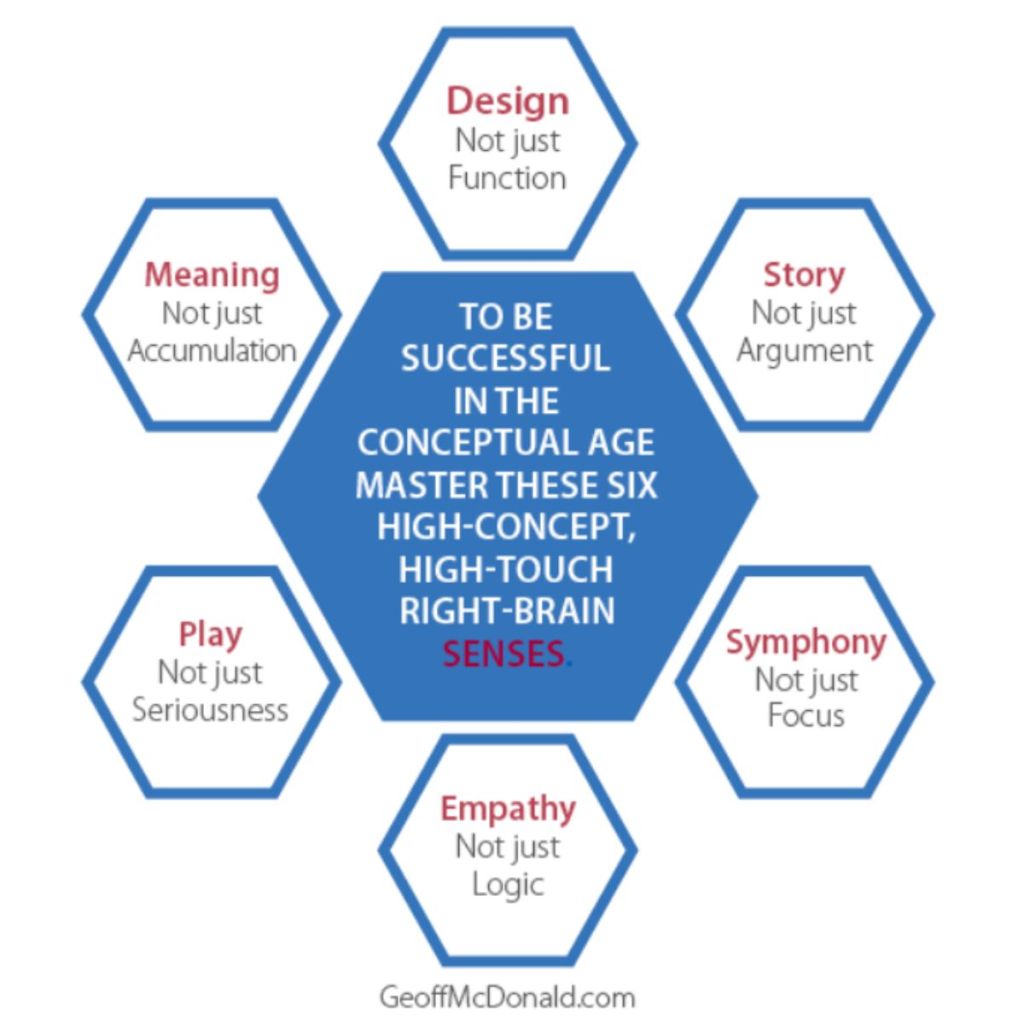
Design: Pink’s concept of design isn’t about mere aesthetic beauty; it’s about crafting pleasing, meaningful, and purposeful environments. This approach echoes Nair’s philosophy of creating student-friendly spaces that inspire and engage. A school designed with this sense in mind would prioritize flexible, adaptable environments that allow students to shape their own learning spaces.
Story: Storytelling has always been a powerful tool for communication and understanding. In education, it can provide a context for knowledge, making it more meaningful and memorable. Schools that encourage storytelling might feature spaces where students can create and showcase their interdisciplinary projects, bringing their narratives to life.
Symphony: This sense is about seeing the big picture and connecting the dots. In an increasingly complex world, the ability to integrate diverse information and ideas is vital. Schools designed to promote symphony would encourage holistic, interdisciplinary learning, perhaps through thoughtful spatial layout or innovative use of technology.
Empathy: As our world becomes more interconnected, the ability to understand and share the feelings of others has never been more important. Schools designed with empathy in mind would feature inclusive and diverse spaces that promote collaborative activities, community building, and understanding of different perspectives.
Play: Pink recognizes play as a key component of human development and learning. Similarly, Nair advocates for learning environments that promote joy and engagement. Schools embracing this sense would incorporate areas for unstructured play and exploration, fostering creativity and curiosity.
Meaning: Last but not least, the sense of meaning revolves around the pursuit of purpose and personal significance. Education is not just about academic achievement; it’s about helping students find their place in the world. Schools that promote meaning would provide spaces for quiet reflection and self-directed learning, allowing students to connect their educational journey with their personal interests and values.
A New Vision for School Design Unfortunately, many traditional school designs often fail to nurture these senses, inadvertently stifling creativity, empathy, and holistic thinking. In response to this, thinkers like Pink and Nair have proposed new visions for the learning environments of the future.
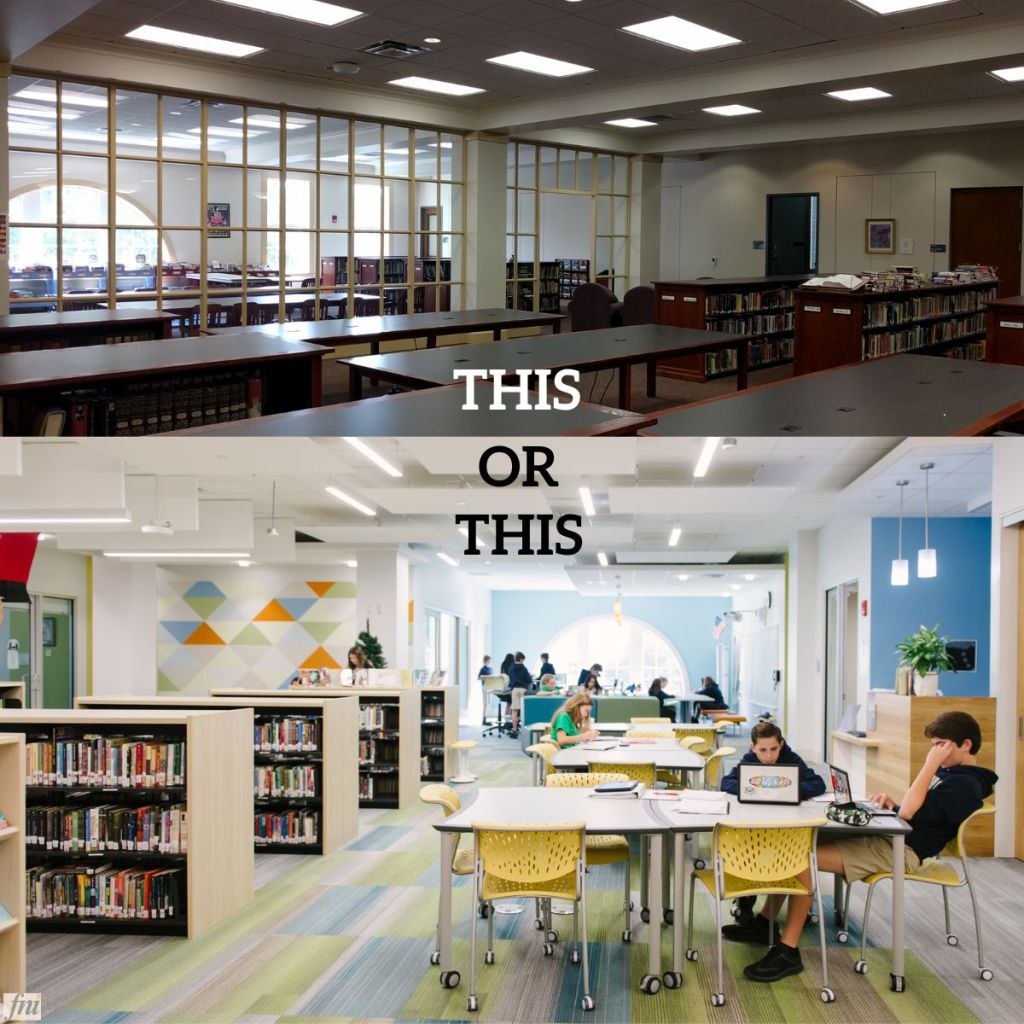
At Education Design International, we strive to bring these innovative concepts to life. We believe that our role is not just to build physical structures, but to create learning environments that nurture the six senses described by Pink. Inspired by Nair’s philosophy, we design spaces that are flexible, student-friendly, and geared towards holistic, joyful, purpose-driven learning.
We understand that we’re not only shaping buildings, but also the future leaders who will thrive within them. By designing schools that nurture the six senses, we aim to prepare students for the future, fostering their creativity, empathy, and holistic thinking, and helping them find joy and meaning in their learning journey.

 FOUNDATIONS
Leave a comment