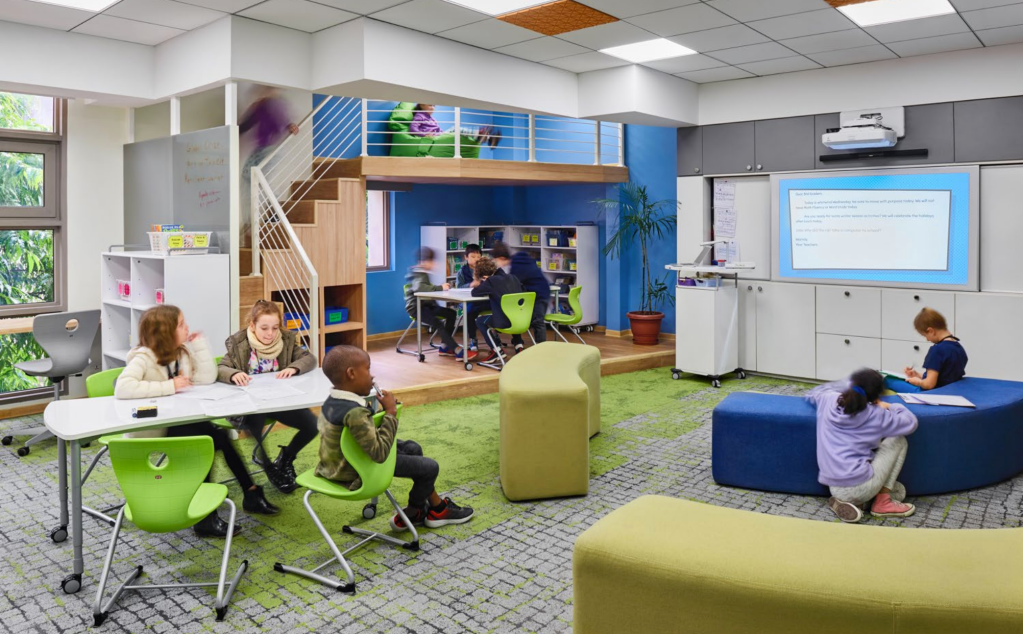


How can we design schools to promote the overall well-being of students? “Neuroarchitecture—Health, Happiness & Learning,” a white paper by Dr. Parul Minhas, Prakash Nair, AIA, and Louis Sirota, AIA, offers a compelling answer. They propose an integrative approach of neuroarchitecture in school design, which considers the interplay of the built environment with the nervous system and its impact on academic performance, emotional health, and physical well-being.
Their work elucidates how thoughtful design interventions and small learning communities can create environments that reduce stress and foster a sense of belonging. With these strategies, schools can restore neuroendocrine balance, improving students’ resilience and emotional well-being. By designing spaces that support positive emotional health, release “happy neurochemicals,” and facilitate interpersonal connections, schools can play a significant role in cultivating a healthier and more resilient student population. These insights underscore the critical need for architects, educators, and policymakers to recognize the value of neuroarchitecture in designing schools that nurture both the minds and bodies of our future generations.

 FOUNDATIONS